Mosaicism
Mosaicism happens when a genetic change is present in some cells but not others. This can occur if the change arises after fertilization during early development. Depending on which cells and tissues carry the change, mosaicism can influence symptoms, test results, recurrence risk, and how a condition presents. Sometimes mosaicism is found in a child; sometimes it is found in a parent at a low level.
Why it matters
Mosaicism can affect diagnosis, genetic counseling, and how families understand recurrence risk. It can also explain why symptoms vary from person to person.
Related content
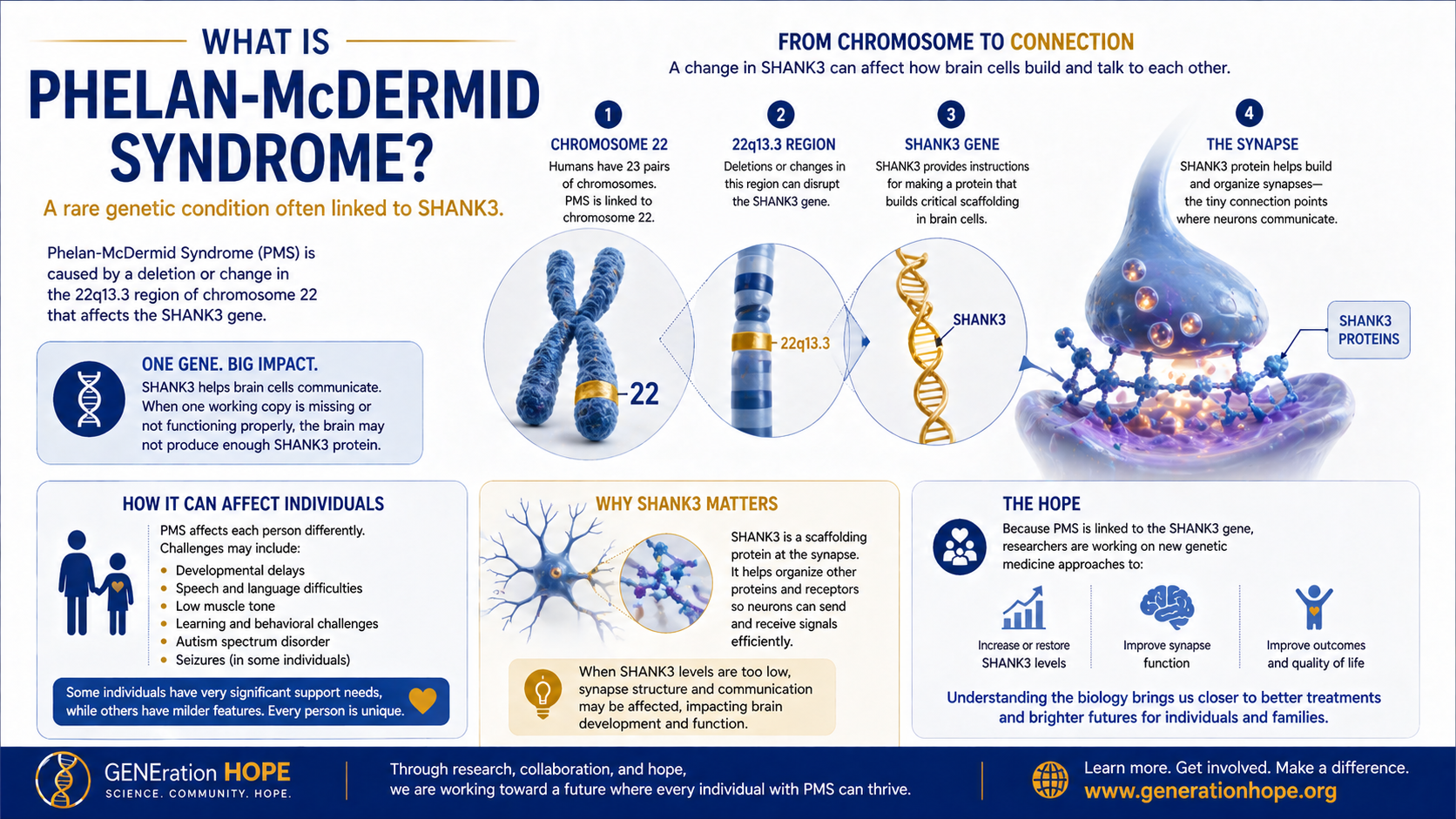
What Is Phelan-McDermid Syndrome?
Phelan-McDermid Syndrome is a rare genetic condition often linked to changes involving SHANK3 on chromosome 22.

Dr. Curtis Rogers on Phelan-McDermid: Diagnosis, Newborn Screening, AI & Gene Therapy Delivery
Dr. Curtis Rogers
Dr. Curtis Rogers is a Senior Clinical Geneticist at the Greenwood Genetic Center and a long-time leader in the Phelan-McDermid syndrome (PMS) community. In this wide-ranging conversation recorded at the 2024 Phelan-McDermid community co...
Could AI Help Solve the Rare Disease Diagnosis Odyssey?
AI may help shorten the diagnostic odyssey, but only if it strengthens clinical judgment instead of adding another opaque layer to an already exhausting process.
Why it matters: Shortening the time to diagnosis can change care planning, research participation, and access to support.
Source: GENEration Hope editorial analysis