Rare Disease Stories
Families, advocates, researchers, and clinicians working to change the future of rare disease.
GENEration Hope is a documentary, interview, and explainer platform following the people, science, and technologies changing what is possible for rare disease families - from gene therapy and RNA medicine to AI-driven drug discovery, newborn genome sequencing, and the future of care.
Dr. Guoping Feng (MIT) on SHANK3 Gene Therapy, Brain Disorders, and What’s Coming Next
Rare disease families are watching several revolutions arrive at once. GENEration Hope connects the human story with the science changing the horizon.
Families, advocates, researchers, and clinicians working to change the future of rare disease.
Gene therapy, ASOs, RNA therapies, exon skipping, base editing, prime editing, and other treatment platforms.
How AI is accelerating discovery, diagnosis, trial design, manufacturing, and our understanding of biology.
How the AI era could reshape caregiving, disability support, education, employment, and human-centred work.
Latest news update
Update for the week of April 27, 2026 A CRISPR-based treatment just delivered pivotal Phase 3 results for a rare and debilitating disease — and for rare disease families, this is a milestone worth understanding. This week, Ron breaks dow...
Watch UpdateFeatured AI + Medicine
AI drug discovery is entering a new phase: not just better software, but a new industrial stack linking frontier models, pharma data, robotics, and real experiments. GENEration Hope follows how those breakthroughs may intersect with rare disease.
Explore AI + MedicineAI drug discovery is entering a new phase: not just better software, but a new industrial stack linking frontier models, pharma data, robotics, and real experiments.
Why it matters: Rare disease research often starts with small datasets, limited funding, urgent timelines, and difficult trial design. AI-linked discovery systems could help researchers generate stronger candidates and better experiments faster, but families should watch for clinical validation, access, manufacturing, and clear evidence rather than hype.
Source: GENEration Hope editorial analysis
Genetic medicine updates
Newborn genome sequencing could move rare disease diagnosis closer to birth, but the promise only matters if health systems can provide consent, follow-up, privacy, and care.
Why it matters: Earlier answers could help families avoid years of uncertainty, but systems need thoughtful consent, follow-up, and equity.
Source: GENEration Hope editorial analysis
Ultra-rare trials are often small, fragile, and difficult to interpret. AI may help researchers design studies that are more realistic without lowering the bar for evidence.
Why it matters: Ultra-rare trials need rigorous design even when traditional large studies are difficult or impossible.
Source: GENEration Hope editorial analysis
AI may help shorten the diagnostic odyssey, but only if it strengthens clinical judgment instead of adding another opaque layer to an already exhausting process.
Why it matters: Shortening the time to diagnosis can change care planning, research participation, and access to support.
Source: GENEration Hope editorial analysis
Latest explainers
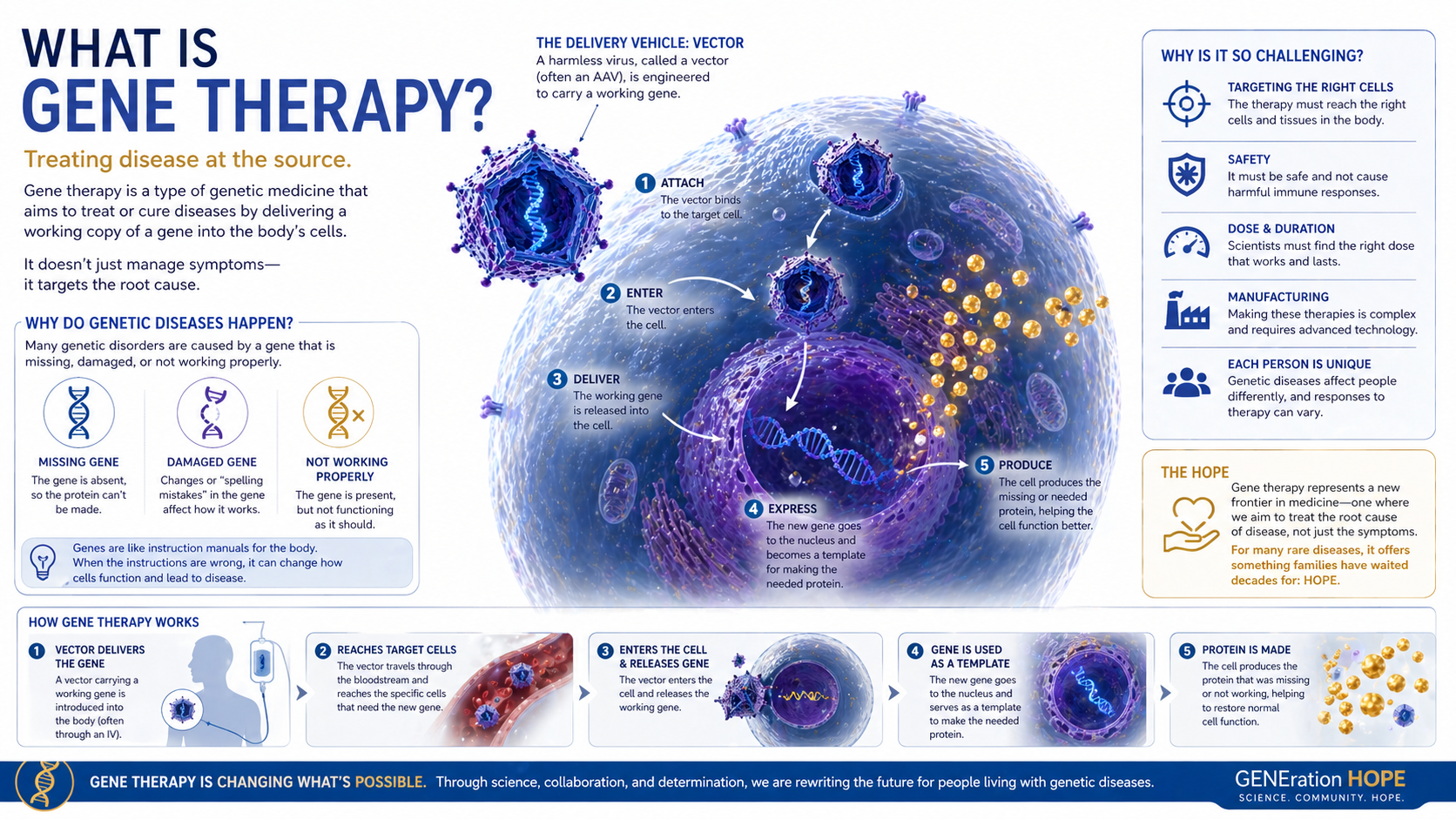
Gene therapy is a treatment approach that tries to address disease at the level of the gene, often by adding, replacing, silencing, or editing genetic instructions.
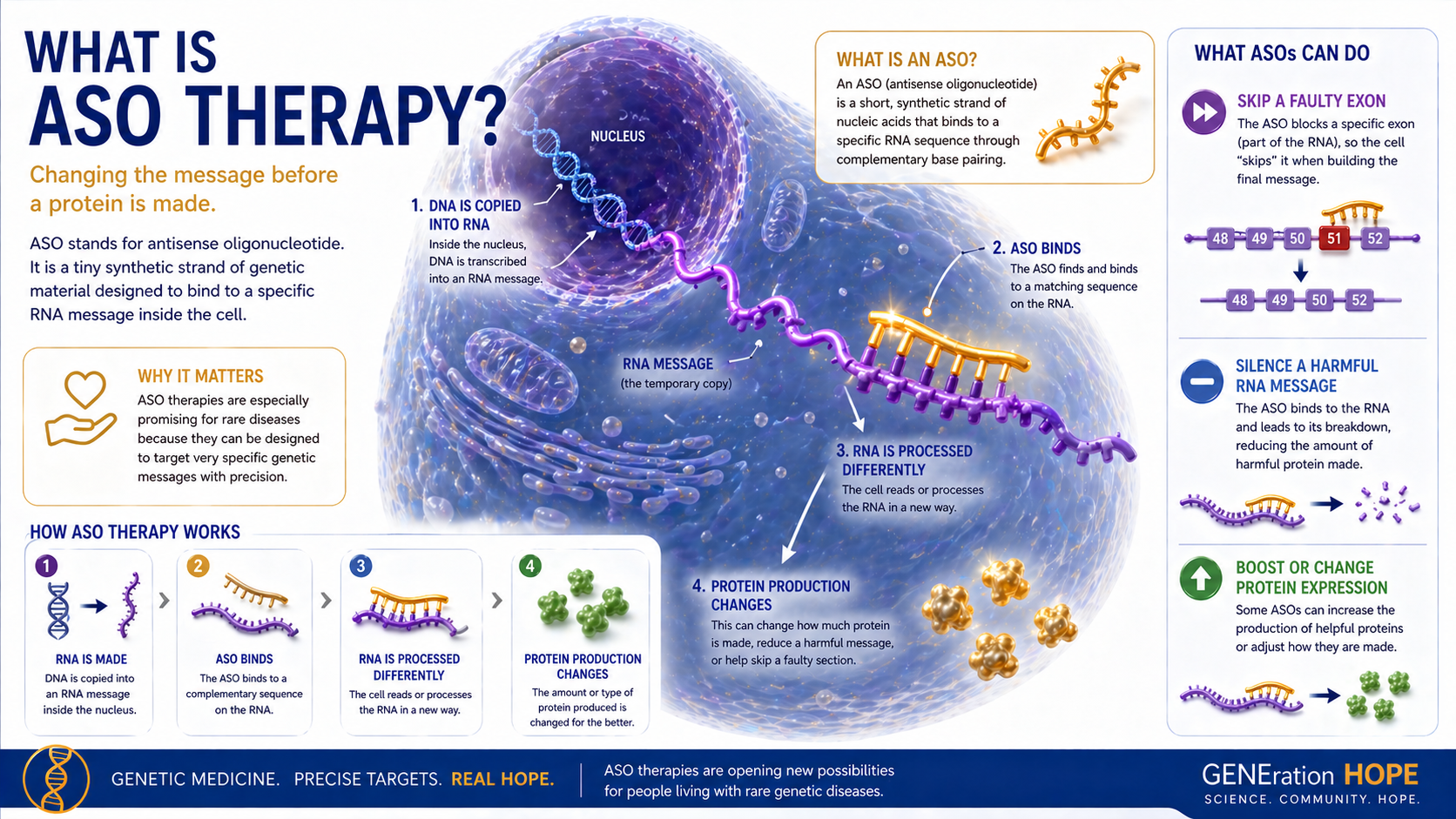
ASO therapy uses short pieces of synthetic genetic material to change how RNA is read, processed, or reduced inside cells.
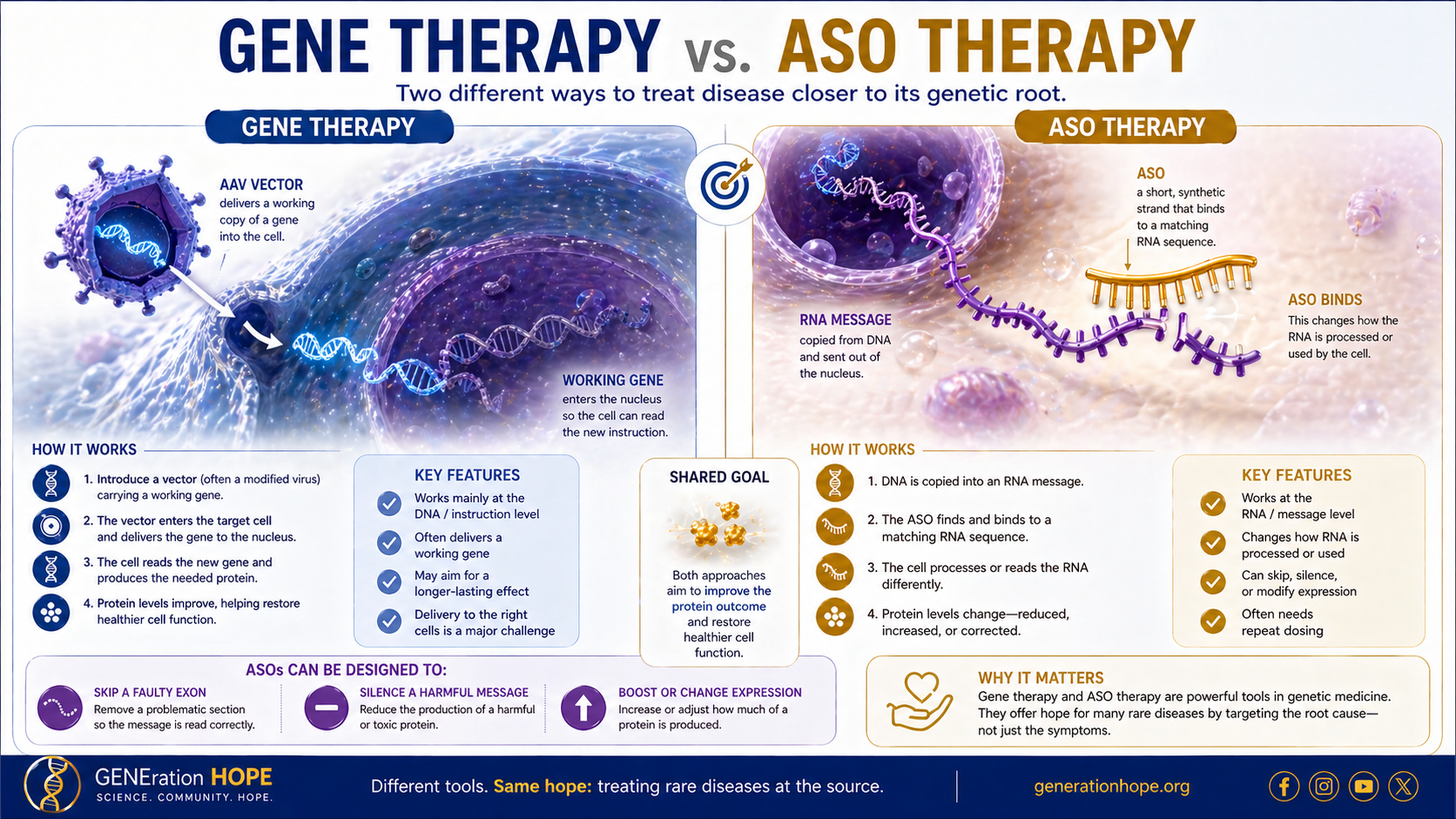
Gene therapy and ASO therapy both work near the genetic root of disease, but they use different tools, timelines, and risk tradeoffs.
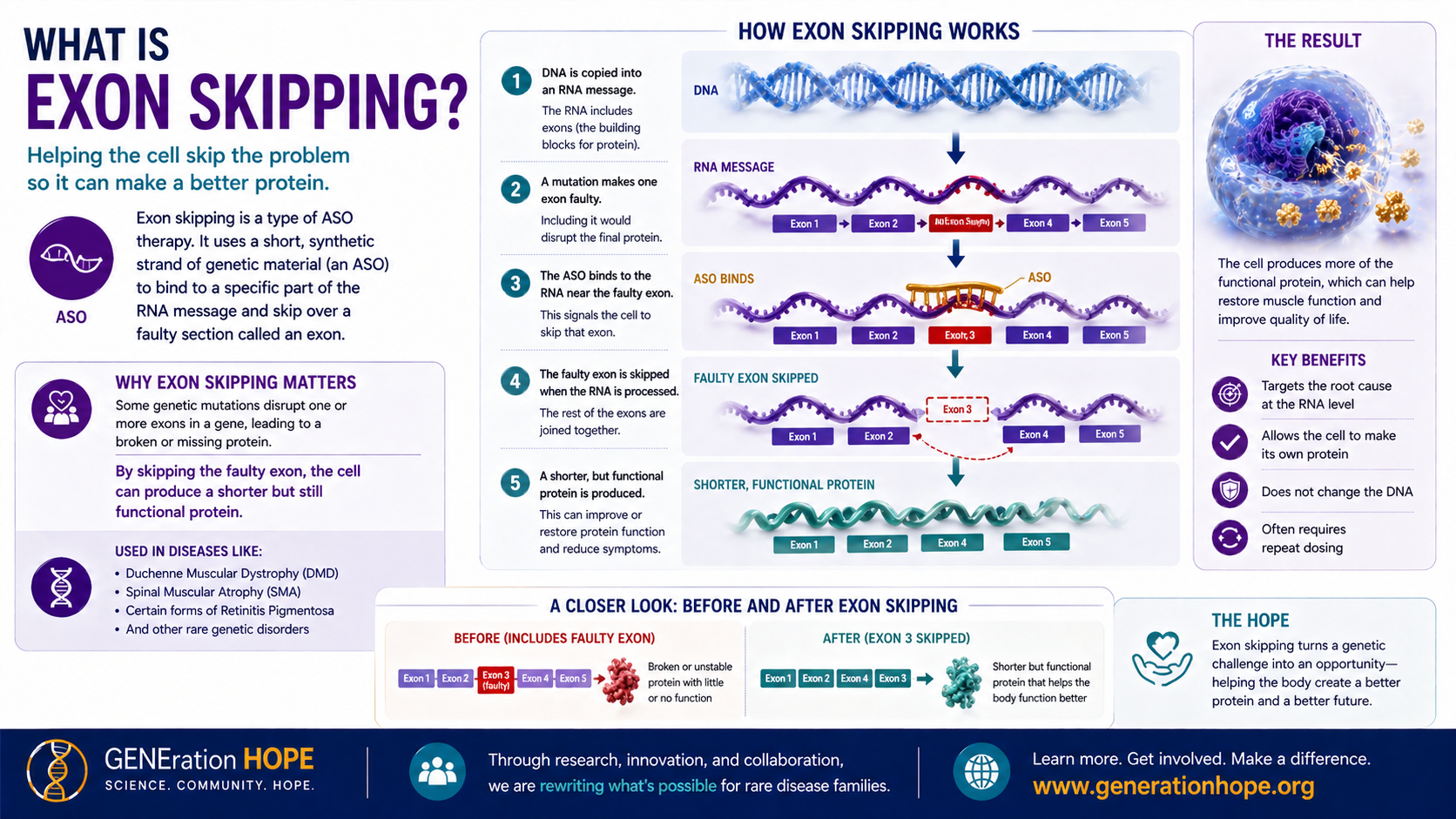
Exon skipping is a strategy that asks the cell to leave out a specific piece of RNA so it can make a shorter but potentially useful protein.
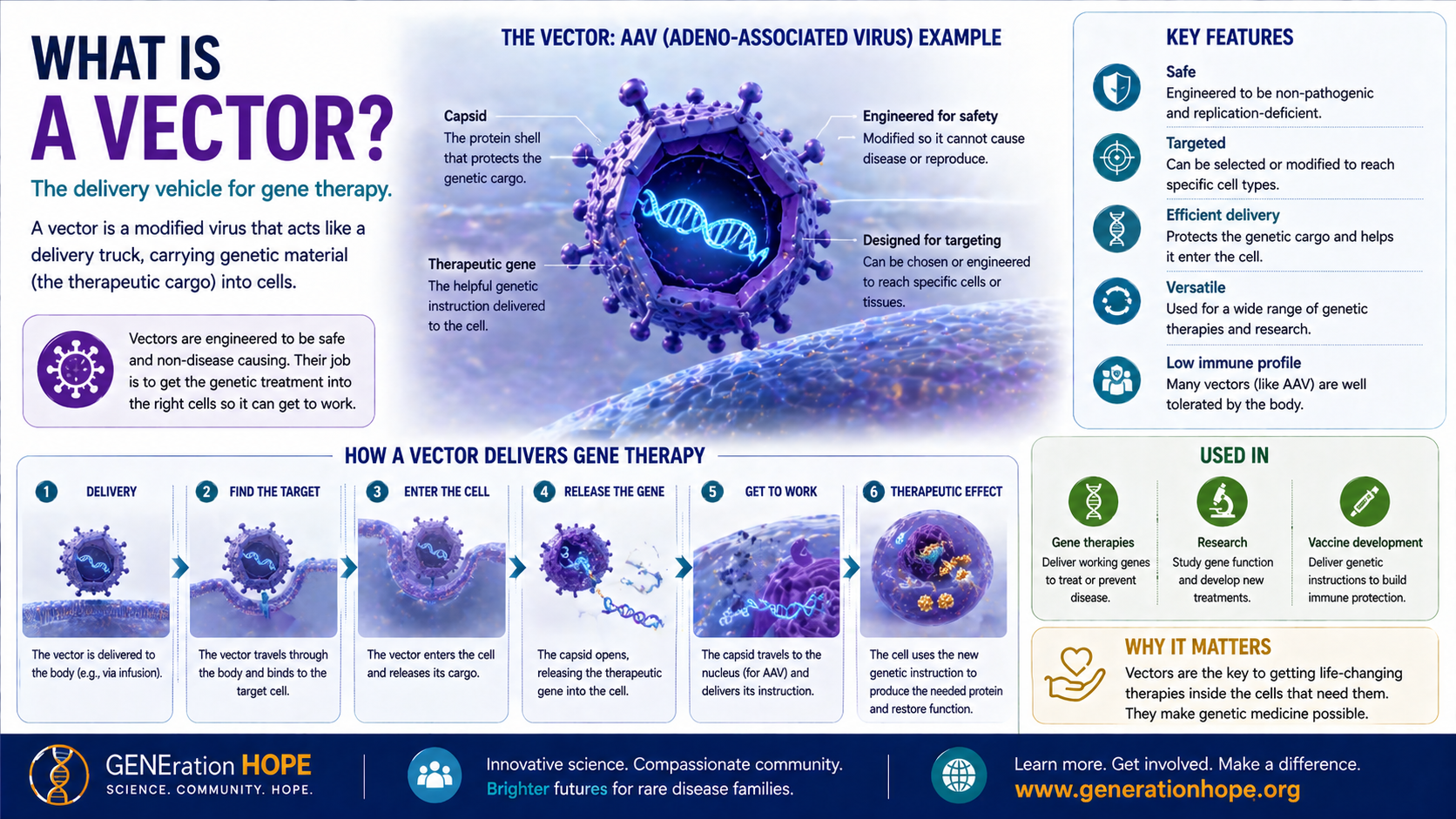
A vector is a delivery vehicle used to carry a therapeutic payload into cells, often in gene therapy.
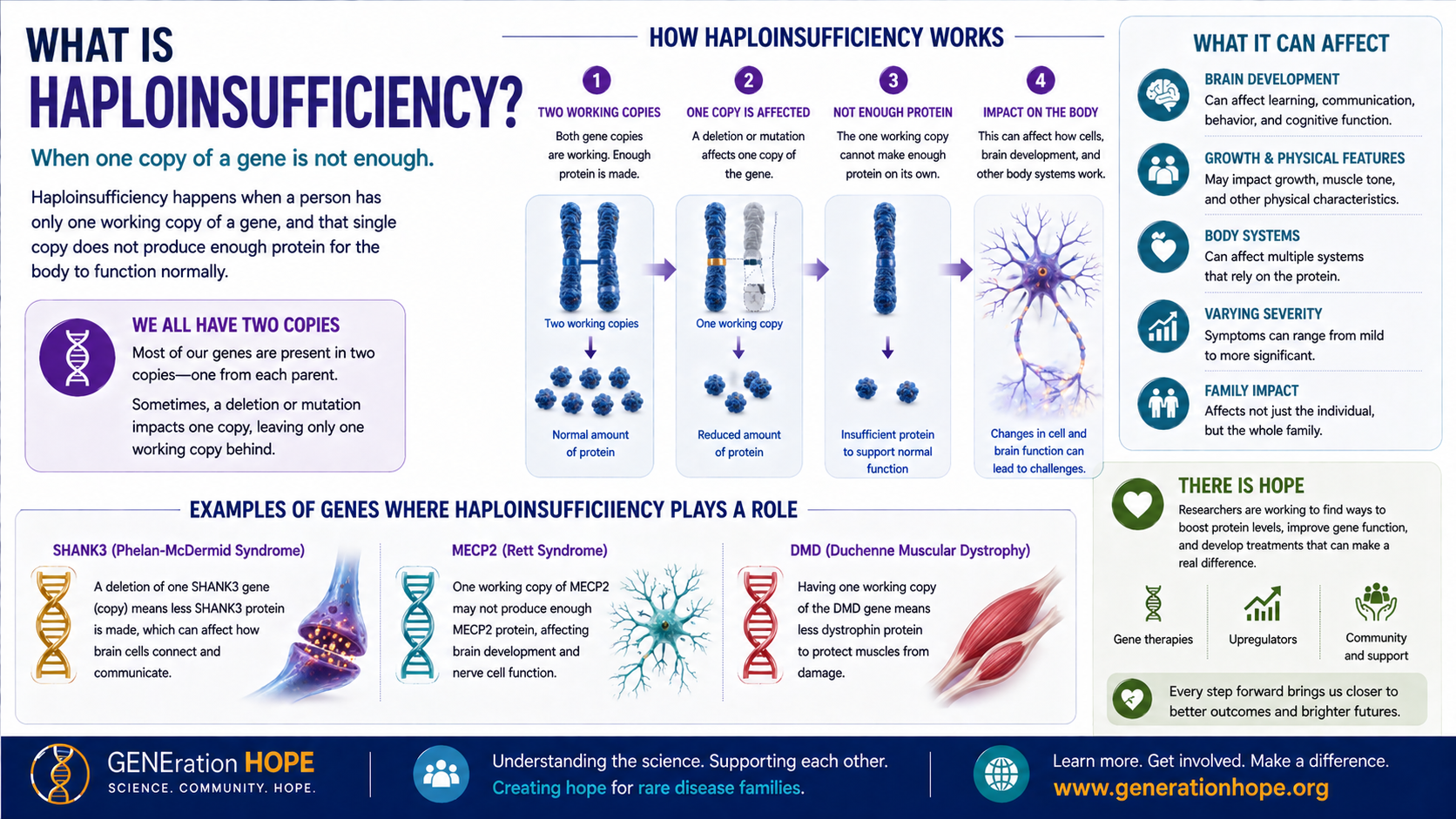
Haploinsufficiency means one working copy of a gene is not enough for the body to make the amount of protein it needs.
Future of Care
As AI changes the economy, GENEration Hope also asks a bigger question: could some of the productivity unlocked by technology be redirected toward deeply human work - caring, supporting, teaching, mentoring, and building better lives for people with disabilities?
Explore Future of Care