Gene Therapy
Gene therapy is a broad term for medicines designed to act on genetic instructions. Some gene therapies add a working copy of a gene. Others silence a harmful gene, edit DNA, or change how a gene is regulated. In rare disease, gene therapy is often discussed when a condition is caused by a known genetic change, but the approach depends on the gene, tissue, delivery method, disease stage, and safety profile.
Why it matters
Gene therapy has changed what some rare disease families can imagine, but every program faces practical questions about delivery, dosing, durability, immune response, access, and whether the therapy changes outcomes that matter.
Related content
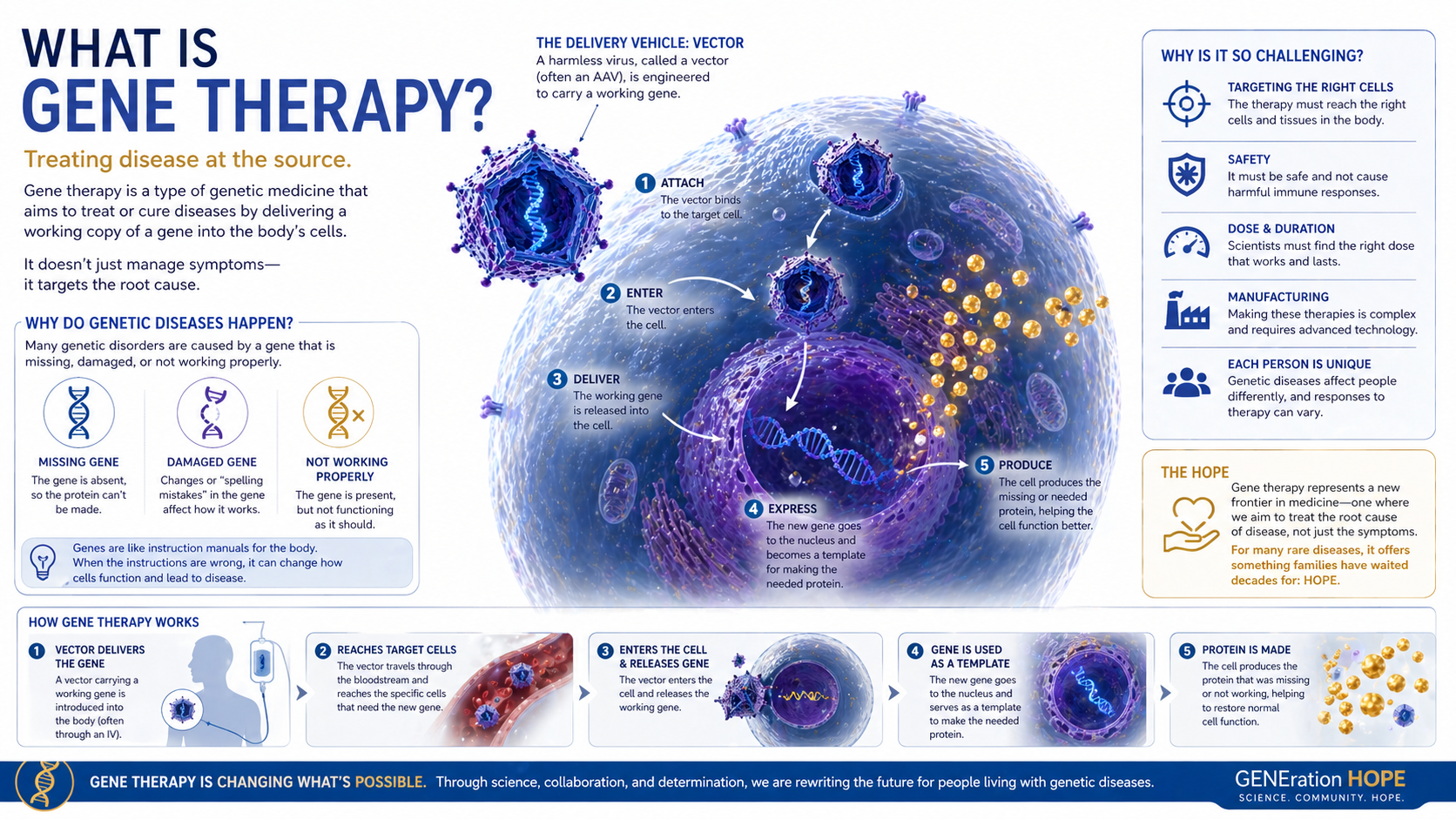
What Is Gene Therapy?
Gene therapy is a treatment approach that tries to address disease at the level of the gene, often by adding, replacing, silencing, or editing genetic instructions.

Dr. Guoping Feng (MIT) on SHANK3 Gene Therapy, Brain Disorders, and What’s Coming Next
Dr. Guoping Feng
Welcome — I’m Ron Kleiman, and this is GENEration Hope. In this episode, I’m joined by Dr. Guoping Feng, Professor of Neuroscience at MIT, affiliated with the McGovern Institute, the Yang Tan Collective, and the Broad Institute. 
What AI Drug Discovery Could Mean for Rare Disease Families
AI drug discovery is entering a new phase: not just better software, but a new industrial stack linking frontier models, pharma data, robotics, and real experiments.
Why it matters: Rare disease research often starts with small datasets, limited funding, urgent timelines, and difficult trial design. AI-linked discovery systems could help researchers generate stronger candidates and better experiments faster, but families should watch for clinical validation, access, manufacturing, and clear evidence rather than hype.
Source: GENEration Hope editorial analysis