
Intrathecal Delivery
Intrathecal delivery means giving a therapy into the cerebrospinal fluid, usually through a lumbar puncture or a device, so it can reach the central nervous system more directly. This route is used or studied for some neurological diseases because the blood-brain barrier can prevent many medicines from reaching the brain and spinal cord after ordinary blood-based dosing.
Why it matters
Many rare diseases affect the nervous system. Understanding intrathecal delivery helps families ask practical questions about procedure burden, repeat dosing, safety, anesthesia, and whether the therapy reaches the right tissues.
Related content
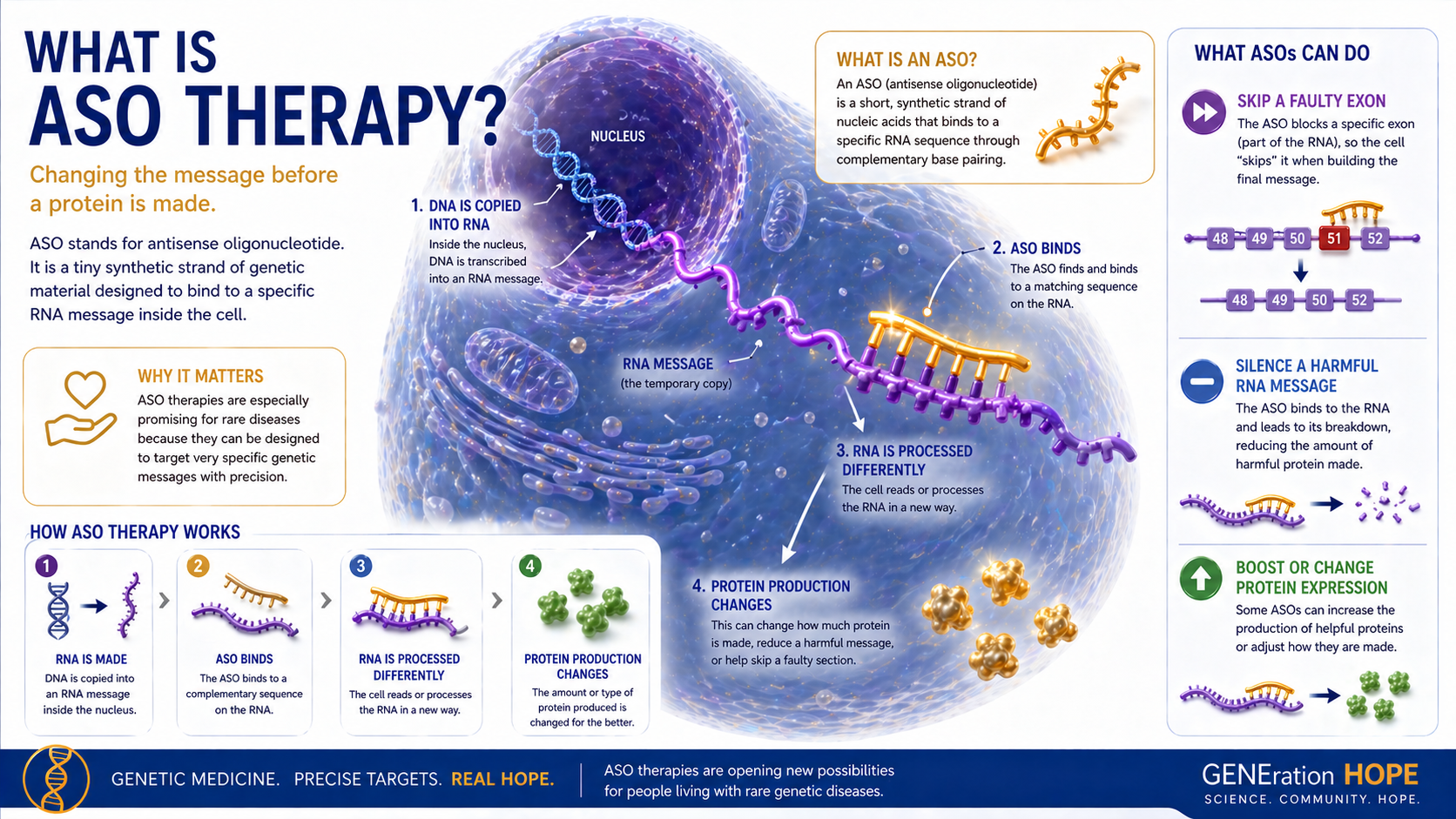
What Is ASO Therapy?
ASO therapy uses short pieces of synthetic genetic material to change how RNA is read, processed, or reduced inside cells.

Dr. Guoping Feng (MIT) on SHANK3 Gene Therapy, Brain Disorders, and What’s Coming Next
Dr. Guoping Feng
Welcome — I’m Ron Kleiman, and this is GENEration Hope. In this episode, I’m joined by Dr. Guoping Feng, Professor of Neuroscience at MIT, affiliated with the McGovern Institute, the Yang Tan Collective, and the Broad Institute. 
How AI Could Change Clinical Trials for Ultra-Rare Disorders
Ultra-rare trials are often small, fragile, and difficult to interpret. AI may help researchers design studies that are more realistic without lowering the bar for evidence.
Why it matters: Ultra-rare trials need rigorous design even when traditional large studies are difficult or impossible.
Source: GENEration Hope editorial analysis