iPSC
iPSC stands for induced pluripotent stem cell. Scientists can take an adult cell, such as a skin or blood cell, and reprogram it into a stem-cell-like state. These cells can then be guided to become different cell types, such as neurons or heart cells, in the laboratory. In rare disease research, patient-derived iPSCs can help scientists study disease biology and test possible therapies in cells carrying a person's genetic background.
Why it matters
iPSCs can give researchers a patient-relevant model when animal models are limited or when the affected tissue is hard to study directly. They are research tools, not automatic treatments.
Related content
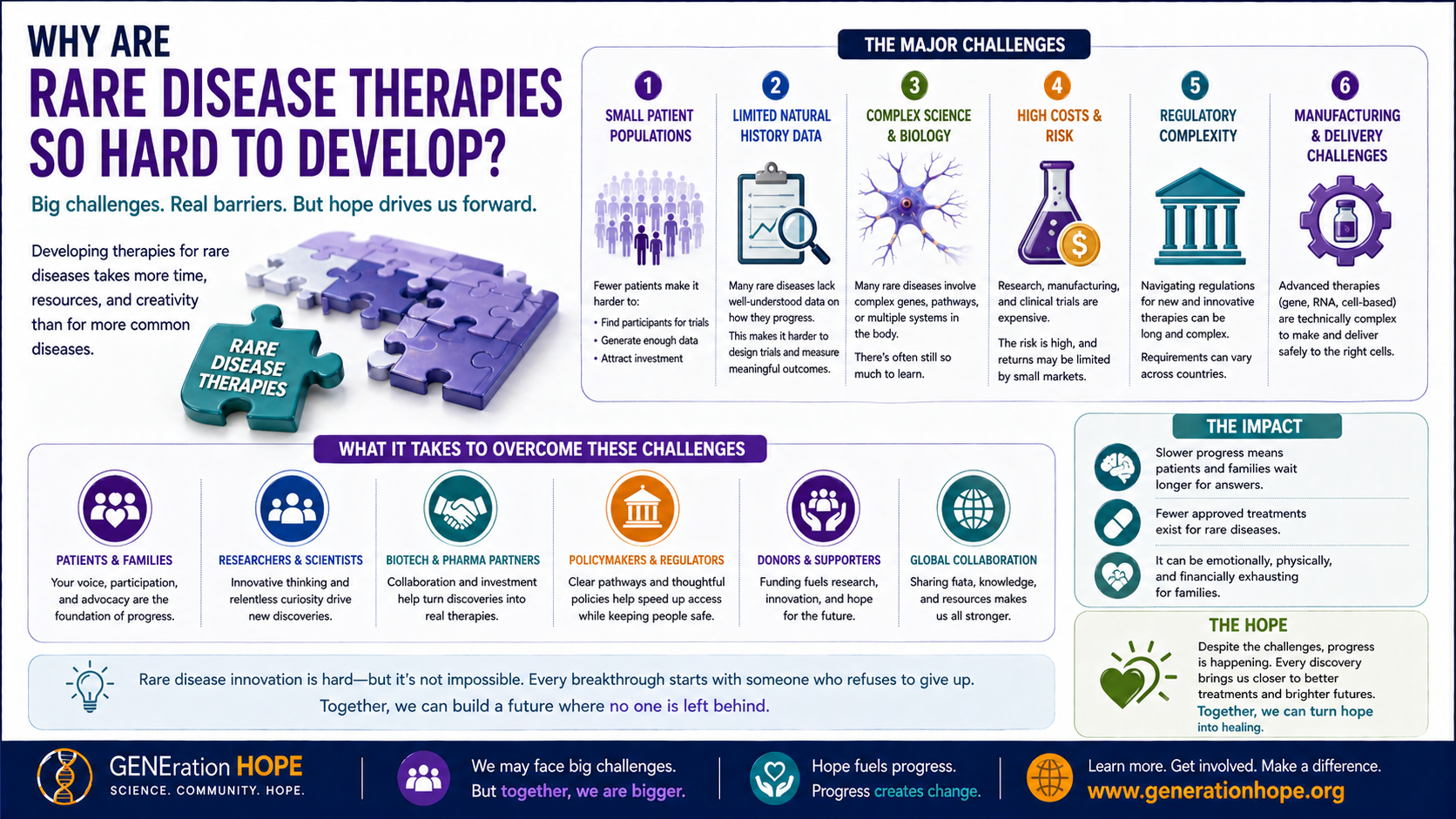
Why Are Rare Disease Therapies So Hard?
Rare disease therapies are hard because the science, trial design, manufacturing, funding, and access challenges all arrive at once.

Dr. Guoping Feng (MIT) on SHANK3 Gene Therapy, Brain Disorders, and What’s Coming Next
Dr. Guoping Feng
Welcome — I’m Ron Kleiman, and this is GENEration Hope. In this episode, I’m joined by Dr. Guoping Feng, Professor of Neuroscience at MIT, affiliated with the McGovern Institute, the Yang Tan Collective, and the Broad Institute. 
What Are Biological Foundation Models?
Biological foundation models are trained on the raw languages of life, and researchers are watching to see whether they can make biology more searchable, predictable, and useful.
Why it matters: These models may help scientists reason across genes, proteins, cells, and disease mechanisms, but they must be tested carefully in real biology.
Source: GENEration Hope editorial analysis