Dr. Katy Phelan: The Origins of Phelan-McDermid Syndrome + Why Hope Is Growing
Dr. Katy Phelan
Geneticist and Phelan-McDermid Syndrome namesake
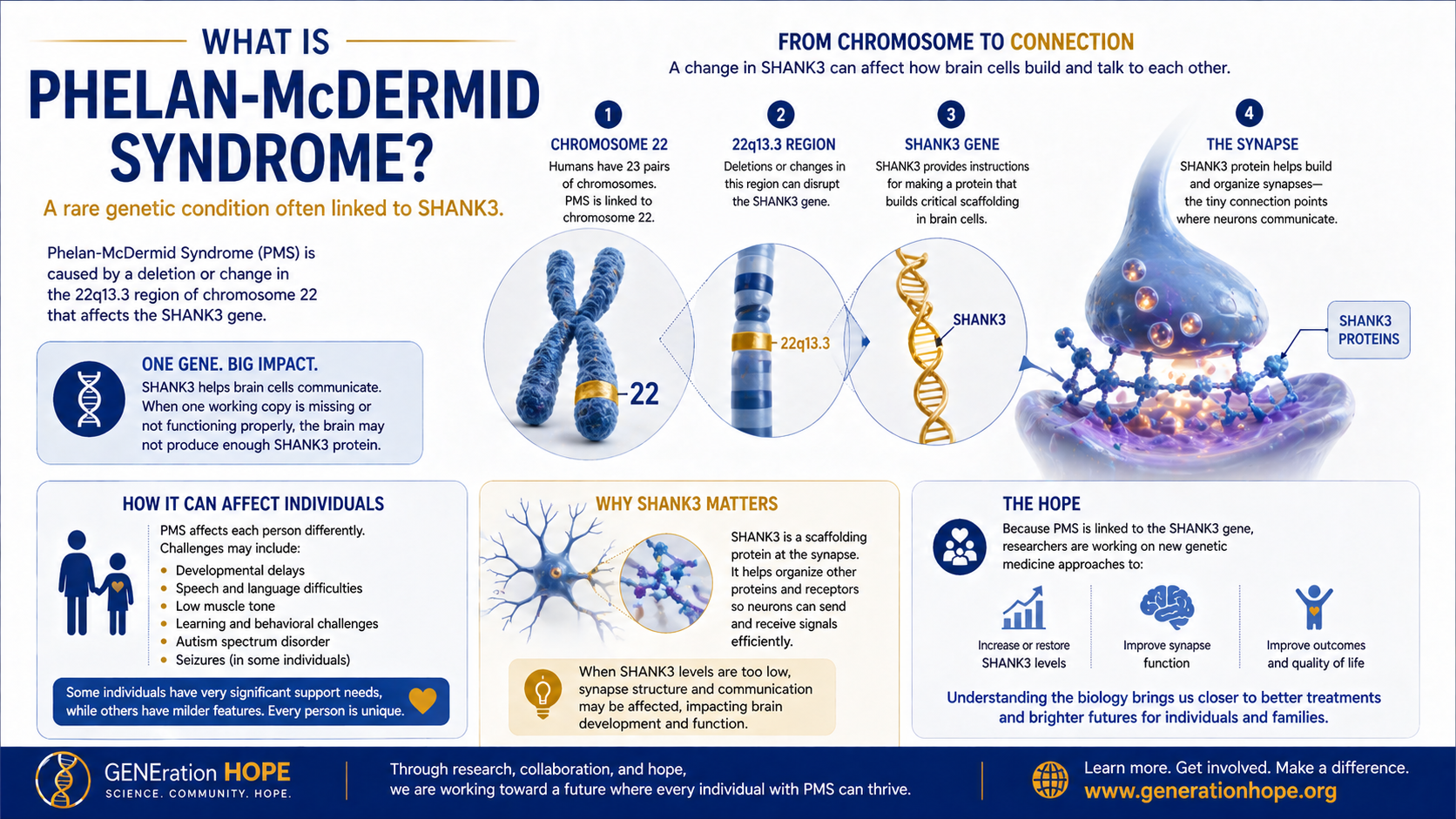
Welcome to GENEration Hope — I’m Ron Kleiman. Today’s guest is Dr. Katy Phelan, a pioneering human geneticist and one of the founders of the Phelan-McDermid Syndrome Foundation (PMSF). This conversation was recorded at the PMSF Annual Conference (2024). Dr. Phelan takes us back to the earliest days of how Phelan-McDermid syndrome was first identified, how families found each other long before social media, and why community became a turning point for so many parents. We also break down diagnostics in plain language — including microarray, sequencing, and why chromosome analysis can still matter — and we talk about what’s giving families real hope as research and treatments move closer. If conversations like this are helpful, please subscribe and turn on notifications so you’re alerted each month when a new interview drops, along with updates from GENEration Hope. Stay Hopeful, Ron ⸻ Chapters (paste into YouTube) 00:01:21 Who is Dr. Katy Phelan (geneticist + PMSF founder) 00:01:44 “Girls aren’t built for math” — and proving that wrong 00:03:17 Why human genetics (and the Celtics + PMS colors story) 00:04:39 The first 22q13 deletion case and the start of collaboration 00:06:04 Community and siblings 00:07:41 How close are we to treatments? (optimism + perspective) 00:09:26 Microarray explained (and what it can’t tell you) 00:10:22 Why chromosome analysis still matters (ring chromosomes) 00:12:10 Publishing → families calling → learning from parents 00:13:05 “They wanted a name like Down syndrome” 00:14:26 The first meeting (grant, logistics, and rapid growth) 00:18:03 Early whole genome sequencing + diagnostic guidelines 00:20:11 US insurance vs Canada timelines/access realities 00:21:34 Gene therapy: what families worry about most 00:24:38 Misdiagnoses and missed chromosome tests 00:29:37 Toronto: why SHANK3 variants may be undercounted 00:31:38 Shank3-related vs Shank3-unrelated PMS (inclusion) 00:35:41 Deletions vs variants: what it can mean clinically
Key topics
- syndrome history
- diagnosis
- community building
Chapters
- 1. Who is Dr. Katy Phelan (geneticist + PMSF founder) 00:01:44 “Girls aren’t built for math” — and proving that wrong 00:03:17 Why human genetics (and the Celtics + PMS colors story) 00:04:39 The first 22q13 deletion case and the start of collaboration 00:06:04 Community and siblings 00:07:41 How close are we to treatments? (optimism + perspective) 00:09:26 Microarray explained (and what it can’t tell you) 00:10:22 Why chromosome analysis still matters (ring chromosomes) 00:12:10 Publishing → families calling → learning from parents 00:13:05 “They wanted a name like Down syndrome” 00:14:26 The first meeting (grant, logistics, and rapid growth) 00:18:03 Early whole genome sequencing + diagnostic guidelines 00:20:11 US insurance vs Canada timelines/access realities 00:21:34 Gene therapy: what families worry about most 00:24:38 Misdiagnoses and missed chromosome tests 00:29:37 Toronto: why SHANK3 variants may be undercounted 00:31:38 Shank3-related vs Shank3-unrelated PMS (inclusion) 00:35:41 Deletions vs variants: what it can mean clinically
Transcript
Transcript coming soon. This page is already connected to the published YouTube interview, and the edited transcript can be added here for search and accessibility.
Related explainers and articles
Related interviews
Dr. Guoping Feng (MIT) on SHANK3 Gene Therapy, Brain Disorders, and What’s Coming Next
Dr. Guoping Feng
Welcome — I’m Ron Kleiman, and this is GENEration Hope. In this episode, I’m joined by Dr. Guoping Feng, Professor of Neuroscience at MIT, affiliated with the McGovern Institute, the Yang Tan Collective, and the Broad Institute. 
Watch InterviewHow a Parent-Led Movement Grows: Sue Lomas (Phelan-McDermid Syndrome Foundation)
Sue Lomas
Sue Lomas helped build the Phelan-McDermid Syndrome community in the earliest days—when families were scattered, information was scarce, and finding “your people” took persistence. In this conversation, Sue and I talk about how rare-dise...
Watch Interview